A small number of bounded engagements alongside my in-house role — building data functions from scratch and advising teams. Two modes: build (hands-on delivery of warehouse, BI, and analytics stacks) and advise (strategic input for founders, CTOs, and boards on data architecture, hiring, and separating AI hype from leverage). NDA-friendly, non-compete with my employer's sectors. Mostly via referral. More on consultancy →
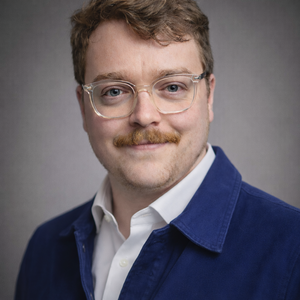
Dr. Christopher Dillon
Head of Data — Nexus Brands Group (PE-backed e-commerce retail)
Astrophysics PhD turned data leader. Head of Data at a PE-backed e-commerce retail group — built the data function and team from scratch across 18 businesses. I work across the whole stack, from pipelines and models to the software people use, and use AI to build it fast and run it cheaply. I ship Mac and iOS apps on the side.
Consultancy
Experience
Head of Data
Jan 2025 - Present
Nexus Brands Group — PE-backed e-commerce retail
Advocated for and created the Head of Data role, then built the data strategy, infrastructure, and team from scratch across 18 businesses in a PE-backed e-commerce retail group. This function has been central to a major global restructuring and optimisation programme — providing the evidence base for strategic decisions across the group. I'm hands-on across the whole stack as data engineer, data scientist, software engineer and people manager: the pipelines, the models, the tools teams use every day, and the team behind them.
- Team: Built and lead a team of PhD-level data scientists and engineers supporting senior leadership across the group.
- Platform: Designed and built FLARE, the group's central data warehouse and reporting platform, with dashboards for every department. It syncs from multiple NetSuite instances, Shopify, Magento, Amazon and the marketing stack, and replaced all legacy reporting behind Entra SSO. It goes beyond dashboards: action engines send automated alerts by email and Teams, and LLMs are built into the workflows. See a public anonymised demo →
- Analytics: CAC modelling, discount dependency, basket & bundle analysis, and pricing and shipping margin modelling. EOS L10 scorecards for every department.
- AI: Build with a mix of paid (Claude Code) and local LLMs, so the team ships far faster. LLMs also run inside the products on self-hosted hardware at near-zero marginal cost: review sentiment, SEO copy analysis, and product description harmonisation across 18 businesses.
- Business impact: Created a unified global data view and got it into the hands of every employee at zero cost per seat, enabling: +25% OTIF; identified £Xm (figure withheld) in excess & obsolete inventory; recovered ~1% of revenue previously lost to out-of-stock; surfaced these to support growth and directly inform the global restructuring.
European Data Scientist
Apr 2023 - Jan 2025
Nexus Brands Group
Built the data function from scratch for 5 European businesses across tattoo, beauty, and pet grooming supply. Consolidated fragmented data sources into a unified data warehouse, enabling consistent automated reporting across all entities. This work laid the groundwork for the global structure I now lead, and resulted in my promotion to Head of Data.
Data Scientist
May 2022 - Apr 2023
Christies Direct (now part of Nexus Brands Group)
Established the Data Science function from scratch at one of the world's largest pet-grooming supply companies. Created unified reporting across Christies and sister company Transgroom. Promoted as the business was acquired into Nexus Brands Group.
Research Fellow
Jan 2022 - Apr 2022
Queen's University Belfast & Randox Laboratories
Post-doctoral position to hand over the biomedical image recognition work from my PhD into Randox's production pipeline. Developed bespoke feature recognition software for biochip designs and created technical documentation for biomedical colleagues.
Astrophysics PhD
Sep 2017 - Feb 2022
Queen's University Belfast
PhD project: Observations and Modelling of Intensity Time series for Biomedical and Astrophysical Applications — joint venture between Queen's and Randox. Developed statistical techniques for below-noise-floor signals, applied to both stellar lightcurves and biochip diagnostics. Led to novel discoveries of stellar nanoflares (published in ApJ) and to image feature recognition software now embedded in Randox's biochip pipeline — 98.8% reduction in downstream processing time in a $12B diagnostics market. Primarily IDL and Python. Redacted thesis.
Publications
2023
Nanoflare Activity on Fully Convective M-dwarf Stars
Statistical Evidence for Stellar Nanoflare Signals in M-type Lightcurves
Monte Carlo Techniques for Nanoflare Detection in Solar Active Regions
Education
MSci Physics, First Class Honours
Sep 2013 - Jun 2017
Queen's University Belfast
Selected as Seagate bursary recipient based on academic merit. Head of peer mentor scheme coordinating 14 mentors supporting 100 students.
Skills
Data Engineering
- Python, SQL
- Polars, DuckDB
- API & ERP pipelines
- Automated alerting
Data Science
- Statistical modelling
- Experimentation
- Customer analytics
- Signal detection in noise
Software & AI
Lead
- People management
- Data strategy
- Hiring
- Team development
- Stakeholder management
- Cross-functional delivery
Contact